Wednesday, 9 August 2017

Companies help patients manage multiple medications

LEAD PHOTO
BURLINGTON, Vt. – When Marty Irons started as a pharmacist 25 years ago, a customer with five prescriptions was exceptional.
"Now it is very common for seniors to have 12 or more. I had a patient yesterday who has 21 medications," said Irons who works at Beauchamp & O'Rourke, a pharmacy in Rutland, Vt..
Customers with multiple prescriptions end up with numerous refill dates, resulting in many trips to drug stores to pick up medications.
The remedy is pharmacy synchronization, which allows pharmacists like Irons to adjust refill dates so customers can pick up all their prescriptions on the same day. To adjust refill dates, pharmacists need to partially fill some prescriptions — and that takes cooperation from insurance companies.
Republican state Sen. Kevin Mullin proposed legislation last winter that would have required insurance companies to cover partial refills of medications for chronic conditions when pharmacists are synchronizing prescriptions.
"I put the legislation in to start the conversation," Mullin said, noting that Connecticut has such a law.
The bill prompted both Blue Cross Blue Shield of Vermont and MVP Health Care to say they would voluntarily allow "short scripts" and to pro-rate the co-payments that their members need to pay.
"It is always good when you don't have to do legislation and people do the right thing," Mullin said.
Officials from both insurance companies said they were still working on setting up a simple way for pharmacists to enter a code that would signal that partial refills are being requested to synchronize prescriptions.
Some pharmacists implemented synchronization programs without waiting for a law or insurance company programs — negotiating partial refills individually with insurance companies.
"We have done a lot of outreach to people," Jill Donahue, pharmacist and owner of the Northfield Pharmacy. She has one staff member who identifies customers who might benefit and offers to reorganize their refills to fall on one date.
"Once people get lined up, it is a very easy program," Donahue said.
Ashley Hudson of Northfield is one of the customers helped by the Northfield Pharmacy's prescription simplification program.
She has four medicines she takes daily and she described her past refill schedule as "absolutely a hassle."
"I'm really busy at work," said the nurse who works at residential care facilities. She sometimes missed refilling prescriptions and sometimes experienced physical side effects from missed dosages.
Northfield Pharmacy suggested synchronization.
"The great thing is they will call" just prior to the date when her prescriptions need to be refilled, she said. "They ask me if there have been any changes" and then tell her when she can pick up all her medications.
"Since I have gone to this system, I haven't had the missed doses," Hudson said. She added that her husband takes eight medications. "It has been really helpful to him, too."

5 reasons why Target sold pharmacy biz to CVS

XXX _TARGET-SHOPPING-EMB262.JPG USA DE
At first glance, Target's (TGT) decision to offload its pharmacy and clinic business to CVS Health (CVS) may seem strange.
Why invite a retail competitor inside your stores?
But investors applauded the $1.9 billion deal.
Here are five reasons why the deal might make sense:
1. Complexity. The health care business is exceedingly complex, requiring a knowledgeable workforce to navigate a regulatory thicket that's evolving rapidly in the wake of the Affordable Care Act.
Target's primary business is selling consumer goods, not prescriptions. CEO Brian Cornell acknowledged Target simply lacks the expertise to operate its pharmacy business efficiently.
2. Profitability. Target's pharmacy business was losing money. Chief Financial Officer John Mulligan confirmed the pharmacy business posted "modestly negative" results in the company's last fiscal year, despite $4 billion in sales.
3. Lack of scale. Target is big, but its real estate footprint is not as wide as CVS'. Target had 1,793 U.S. stores as of 2013, while CVS had more than 7,800. In the pharmacy business, customers need quick access to medications, and more locations makes CVS a more enticing place to fill a prescription.
Also, many CVS locations are open 24 hours a day, giving the drugstore chain an edge in competition with Target.
4. Focus. Target has other priorities that have taken on more urgency. For example, Target is chasing after customers in the highly competitive grocery business.
Cornell said the company must place its emphasis on "elevating our focus on reinventing food." And it must remain relentlessly focused on customer satisfaction to fend off Amazon, Walmart and other players.
5. Foot traffic. Executives believe Target will reap higher foot traffic from CVS customers who visit Target stores to fill prescriptions.
"From a guest perspective, they're going to view this as a very positive change, and we expect it to improve traffic and script counts," Cornell said.
Follow USA TODAY reporter Nathan Bomey @NathanBomey.

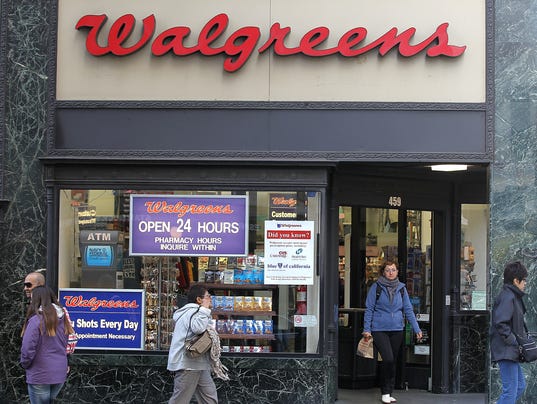
Walgreens offering digital doctor visits in 5 states

Walgreens
Pharmacy giant Walgreens is rolling out $49 digital doctor visits that will enable customers to connect via their computer or tablet with a doctor at any time of day or night.
Walgreens, which sees the service as an extension of its popular walk-in clinics, launched the program in five states last week and plans to add another 20 states, where such doctor visits are permitted, by the end of the year.
Walgreen aims to offer more convenience to its 6 million daily retail customers and 2 million daily online visitors, said Harry Leider, Walgreens chief medical officer. The service is intended to address medical problems that can be quickly resolved with a few questions, a straightforward diagnosis and perhaps a prescription – such as sore throats, colds, minor rashes and allergies, he said.
"It's really geared for people with acute, relatively minor illnesses," Leider said. "We don't want people with chest pains or concerns about heart attacks or strokes or serious illness using this service. [But] our own experience is that's not what's happening."
Dr. Robert Wergin, a family physician based in Milford, Neb., said he'd love to be able to communicate with his patients between formal visits, checking up on them via phone or video conferencing. "There's potentially real benefits to it," he said.
But Wergin, president of the American Academy of Family Physicians, said he's also concerned that appointments with a doctor who doesn't know or can't see a patient will lead to mistakes or missed opportunities.
Medical professionals at an urgent care clinic recently diagnosed one of Wergin's patients with sinusitis. When her symptoms persisted and Wergin saw her, he immediately recognized that she wasn't herself, and she ended up being diagnosed with a brain tumor.
In-person visits are also opportunities to check in with patients about a test they're due for or other problems they might have, Wergin said. Payments are also an issue. Right now, Wergin said, insurance companies won't reimburse him for virtual appointments.
"The only way for me to have a business model is for you to come in and have a visit," he said.
Other virtual providers have already met with success, albeit on a much smaller scale.
At two Harvard-affiliated hospitals, for instance, some patients can get virtual follow-up visits with their specialists, said Joseph C. Kvedar, vice president of Connected Health, the hospitals' telemedicine program.
Virtual care can work particularly well for follow-up mental health visits, Kvedar, a dermatologist, said. Providers get to see their patients in a more natural environment, he said, and patients can avoid what may be a very stressful, anxious trip to an office.
Because of its size, Walgreens' move has the power to transform the primary care market, said Randy Parker, CEO of MDLIVE, the six-year-old telemedicine company that will provide the virtual service for Walgreens.
Parker said he expects that eventually most or all doctors' practices will provide virtual visits to their patients, alleviating the need for about half of all in-person appointments.
To expand, however, Walgreens and MDLIVE will need changes in state regulations in the 25 states were such visits are not permitted.
Currently, doctors who make virtual house calls through MDLIVE are either staff members or trained by the company to follow a basic algorithm that determines who is a good candidate for a virtual visit, based on a few questions about medical history and symptoms. If the service is appropriate, the patient can speak with a doctor and will be charged $49 for the visit. Doctors will earn about $30 for each appointment, Parker said.
The price is intentionally set below what a normal doctor's visit would run as an incentive to use the service instead of a costly emergency room, he said.
Marc Adler of Ft. Lauderdale said he was skeptical about the idea of telemedicine until he started feeling ill on a trip to Gainesville a few years ago. He was able to request an MDLIVE appointment on his cell phone and within 90 minutes was talking to a doctor.
The doctor prescribed an antiviral medication, and by the time Adler drove to a nearby pharmacy, his prescription was ready and waiting.
"I found the entire process to be very quick and very pleasurable," he said. "It was a great experience."

Bacteria found in more drugs from Mass. pharmacy

Meningitis Outbreak
Federal investigators say they found contamination — this time, bacterial — in two more drugs produced by a Massachusetts specialty pharmacy whose fungus-tainted steroid shots have been linked to a massive meningitis outbreak.
Tests found several different strains of bacillus in a steroid and a medicine used in heart surgery that were produced by New England Compounding Center, the federal Food and Drug Administration and U.S. Centers for Disease Control and Prevention said Thursday.
The bacteria are commonly found in soil. The CDC said it has not received any reports of infections from the medications.
The bacteria were in three lots of the steroid betamethasone and one lot of cardioplegia solution, which is used to slow or stop the heart during surgery.
The CDC said it is still testing those lots for fungal contamination similar to those found in three lots of methylprednisolone acetate, another steroid, made by NECC. Those lots are considered the likely source of a fungal meningitis outbreak that so far has sickened 386 people and killed 28 in 19 states.
The latest test results "reinforce the FDA's concern about the lack of sterility in products produced at NECC's compounding facility and serve to underscore that hospitals, clinics, and health care providers should not use any NECC-supplied products," the agency said.
Because operations like New England Compounding, which produce large amounts of compounded drugs, fall through federal regulatory cracks and often are subject only to state rules, a Massachusetts lawmaker is proposing to require that big companies register with the FDA and be subject to the same requirements as major pharmaceutical companies.
"Compounding pharmacies have been governed by fragmented regulations for too long, leading to the worst public health disaster in recent memory," said Rep. Edward Markey, D-Mass., adding that his bill would end "this regulatory black hole by giving the FDA new clear authority to protect patients."
A bill similar to Markey's was proposed in 2007, but it never passed.
New England Compounding Center, based in Framingham, Mass., voluntarily ceased operations and recalled all of its products last month.
(Contributing: Walter F. Roche Jr., The Tennessean)

Rite Aid to pay $2B for EnvisionRx

AP EARNS RITE AID F FILE USA MI
CAMP HILL, Pa. — Rite Aid is expanding from running drugstores into managing pharmacy benefits with a planned, $2 billion purchase of EnvisionRx.
Shares of the nation's third-largest drugstore chain (RAD) climbed more than 4% premarket trading.
The company said it will pay about $1.8 billion in cash and $200 million in stock for EnvisionRx, a pharmacy benefit manager, or PBM, owned by the investment firm TPG.
PBMs run prescription drug plans for customers like employers and insurers. They process mail-order prescriptions and handle bills for prescriptions filled at retail pharmacies. EnvisionRx also offers services in a growing area for prescription drug spending, specialty pharmacy, and a national Medicare prescription drug plan.
Rite Aid, which does not have a PBM business, will enter a market dominated by large players like Express Scripts Holding Co. and rival drugstore operator CVS Health Corp.
Rite Aid is based in Camp Hill, Pennsylvania, and runs 4,569 drugstores, a total that trails Walgreen Co. and CVS Health. EnvisionRx is based in Twinsburg, Ohio.
The EnvisionRx deal comes nearly two months after Rite Aid said its fiscal third-quarter earnings jumped 47% in a performance that trumped Wall Street expectations, and the drugstore chain hiked its annual forecast after cutting it for two straight quarters.
The boards of directors for both companies have approved the EnvisionRx deal, which is expected to close in September.
Rite Aid shares rose 4.5%, or 34 cents, to $7.92 in premarket trading about 90 minutes before the stock markets open.
 18LINKEDINCOMMENTMORE
Copyright 2015 The Associated Press. All rights reserved. This material may not be published, broadcast, rewritten or redistributed.

America's most popular stores

AP Retail Sales_001
America's most visited stores are popular for a variety of reasons. According to data provided by Placed, a consumer habits data service provider that monitors behavior of more than 150,000 American consumers at 150 million locations daily, the most popular brands are primarily in the fast-food, discount retail and pharmacy segments.
Half of the most visited retailers are fast-food chains. Placed founder and CEO David Shim explained that while you don't need household supplies every day, "three times a day or more you need to eat, so there's a higher propensity to visit these types of businesses." The lower price per transaction at fast-food chains compared to other retailers also helps them to attract consumers, Shim noted.
Consumers also regularly shop at the country's biggest drugstore chains and big-box retailers. In addition to selling widely purchased goods, these retailers have the most locations in the country. Walgreens, 7-Eleven and CVS Caremark all had more than 7,000 U.S. locations in 2012, among the most stores nationwide. Food chains were even more numerous. Subway, McDonald's and Starbucks were all among the top five companies by store count, each with well over 14,000 U.S. locations in 2012.
Many of the most popular stores with consumers tended to have large advertising budgets. According to Shim, "From our perspective, [advertising] dollars do matter in terms of driving traffic in the store." In fact, seven of the 10 most popular stores were among the top-spenders on advertising nationwide in 2011 and 2012, according to Advertising Age, a magazine providing market and industry data.
Placed found that consumers' habits differed considerably by gender and income level. "Fast food typically tends to skew more men than women," Shim said. In contrast, retail shoppers skew female. While men and women were equally likely to go to Starbucks, shoppers at Target were 16% more likely to be women, and Taco Bell diners were 13% more likely to be men.
Americans making more than $100,000 per year were on the whole were more likely to shop at big-box retailers and drugstores than those making between $25,000 and $100,000. On the other hand, consumers making less than $25,000, were more likely to eat at three of the most popular fast food restaurants — Burger King, McDonald's and Taco Bell — than those making more than $100,000.
To determine the nation's most popular stores, 24/7 Wall St. reviewed data from location analytics company Placed. Placed calculated the percentage of Americans who visited various stores in March 2014. The group also provided demographic and socioeconomic data on customers for various retailers and restaurants. These are indexed to a base of 100, representing the average American consumer. We also reviewed 2012 U.S. sales and store count data from the National Retail Federation's Stores.org, as well as advertising expenditure figures from AdAge covering 2011 and 2012.
These are America's most popular stores.
1. Walmart
> Index score, women: 106
> Index score, men: 93
> Store count: 4,570
> One-year stock-price change: -0.9%
> Store category: Department store
Wal-Mart Stores is far and away the nation's largest retailer, with nearly $329 billion in U.S. retail sales in 2012. Unlike many other popular destinations, Americans earning more than $100,000 a year were far less likely to visit Walmart than the average American. Walmart continues to grow, having increased its U.S. store count 3.3% to 4,570 locations in 2012. Walmart spent $1.8 billion on advertising in 2012, effectively unchanged from the year before, but still more than all but a handful of companies.
2. McDonald's
> Index score, women: 97
> Index score, men: 103
> Store count: 14,146
> One-year stock-price change: -0.6%
> Store category: Restaurant
McDonald's was by far the most visited fast-food restaurant in the nation in March. Although McDonald's remains hugely popular, its U.S. same-store sales declined by 1.7% this quarter from the same quarter the year before, with reports citing slowing service times and heightened competition. Among the company's plans to draw diners back to its stores is the recent unveiling of the newly redesigned Ronald McDonald, which attempts to make the icon more contemporary and less clown-like. Like several other popular stores, McDonald's has among the nation's largest advertising budgets, spending $1.4 billion on ads in 2012, up 4.2% from a year before.
3. Subway
> Index score, women: 95
> Index score, men: 105
> Store count: 25,900
> One-year stock-price change: N/A
> Store category: Restaurant
Among restaurants, Subway trails only McDonald's in popularity. While more Americans visit the Golden Arches, by the end of 2010 Subway actually passed McDonald's in the number of stores globally, at 33,749. Subway's expansion continued in 2012, with the number of stores growing 3.5% that year, among the biggest increases nationwide among major chains. Subway spent nearly $545 million on advertising in 2012, up 6.1% from the year before, and more than most other U.S. companies.
4. Starbucks
> Index score, women: 100
> Index score, men: 100
> Store count: 11,128
> One-year stock-price change: +18.2%
> Store category: Restaurant
Starbucks has dominated U.S. coffee sales for years. Its sales have generally continued to grow since its initial public offering in the early 1990s. The coffee chain has changed its product lineup in recent years, introducing a range of foods, including a larger breakfast and lunch menu. The stores also continue to attract coffee drinkers with its free Wi-Fi. Unlike many other popular stores, Starbucks is less segmented by gender or age. As David Shim explains, "Everyone wants coffee." However, unlike others in the food sector, shoppers making more than $100,000 were far more likely — 58% — to buy cup of coffee at Starbucks than those making less than $25,000.
5. Walgreens
> Index score, women: 105
> Index score, men: 94
> Store count: 7,821
> One-year stock-price change: +35.9%
> Store category: Department store
As with many retailers, Walgreens was more popular among women than men. Women were 11% more likely to visit Walgreens than men. The company expanded faster than many others recently, with the number of Walgreens locations growing by 2.2% between 2011 and 2012. Walgreen Co. — the largest pharmacy operator in the nation — was fined $80 million by the Food and Drug Administration last year for failing to properly control distribution of dangerous drugs. According to The New York Times, this was the largest fine ever paid by a pharmacy chain at the time.
24/7 Wall St. is a USA TODAY content partner offering financial news and commentary. Its content is produced independently of USA TODAY.

America's most popular stores

AP Retail Sales_001
America's most visited stores are popular for a variety of reasons. According to data provided by Placed, a consumer habits data service provider that monitors behavior of more than 150,000 American consumers at 150 million locations daily, the most popular brands are primarily in the fast-food, discount retail and pharmacy segments.
Half of the most visited retailers are fast-food chains. Placed founder and CEO David Shim explained that while you don't need household supplies every day, "three times a day or more you need to eat, so there's a higher propensity to visit these types of businesses." The lower price per transaction at fast-food chains compared to other retailers also helps them to attract consumers, Shim noted.
Consumers also regularly shop at the country's biggest drugstore chains and big-box retailers. In addition to selling widely purchased goods, these retailers have the most locations in the country. Walgreens, 7-Eleven and CVS Caremark all had more than 7,000 U.S. locations in 2012, among the most stores nationwide. Food chains were even more numerous. Subway, McDonald's and Starbucks were all among the top five companies by store count, each with well over 14,000 U.S. locations in 2012.
Many of the most popular stores with consumers tended to have large advertising budgets. According to Shim, "From our perspective, [advertising] dollars do matter in terms of driving traffic in the store." In fact, seven of the 10 most popular stores were among the top-spenders on advertising nationwide in 2011 and 2012, according to Advertising Age, a magazine providing market and industry data.
Placed found that consumers' habits differed considerably by gender and income level. "Fast food typically tends to skew more men than women," Shim said. In contrast, retail shoppers skew female. While men and women were equally likely to go to Starbucks, shoppers at Target were 16% more likely to be women, and Taco Bell diners were 13% more likely to be men.
Americans making more than $100,000 per year were on the whole were more likely to shop at big-box retailers and drugstores than those making between $25,000 and $100,000. On the other hand, consumers making less than $25,000, were more likely to eat at three of the most popular fast food restaurants — Burger King, McDonald's and Taco Bell — than those making more than $100,000.
To determine the nation's most popular stores, 24/7 Wall St. reviewed data from location analytics company Placed. Placed calculated the percentage of Americans who visited various stores in March 2014. The group also provided demographic and socioeconomic data on customers for various retailers and restaurants. These are indexed to a base of 100, representing the average American consumer. We also reviewed 2012 U.S. sales and store count data from the National Retail Federation's Stores.org, as well as advertising expenditure figures from AdAge covering 2011 and 2012.
These are America's most popular stores.
1. Walmart
> Index score, women: 106
> Index score, men: 93
> Store count: 4,570
> One-year stock-price change: -0.9%
> Store category: Department store
Wal-Mart Stores is far and away the nation's largest retailer, with nearly $329 billion in U.S. retail sales in 2012. Unlike many other popular destinations, Americans earning more than $100,000 a year were far less likely to visit Walmart than the average American. Walmart continues to grow, having increased its U.S. store count 3.3% to 4,570 locations in 2012. Walmart spent $1.8 billion on advertising in 2012, effectively unchanged from the year before, but still more than all but a handful of companies.
2. McDonald's
> Index score, women: 97
> Index score, men: 103
> Store count: 14,146
> One-year stock-price change: -0.6%
> Store category: Restaurant
McDonald's was by far the most visited fast-food restaurant in the nation in March. Although McDonald's remains hugely popular, its U.S. same-store sales declined by 1.7% this quarter from the same quarter the year before, with reports citing slowing service times and heightened competition. Among the company's plans to draw diners back to its stores is the recent unveiling of the newly redesigned Ronald McDonald, which attempts to make the icon more contemporary and less clown-like. Like several other popular stores, McDonald's has among the nation's largest advertising budgets, spending $1.4 billion on ads in 2012, up 4.2% from a year before.
3. Subway
> Index score, women: 95
> Index score, men: 105
> Store count: 25,900
> One-year stock-price change: N/A
> Store category: Restaurant
Among restaurants, Subway trails only McDonald's in popularity. While more Americans visit the Golden Arches, by the end of 2010 Subway actually passed McDonald's in the number of stores globally, at 33,749. Subway's expansion continued in 2012, with the number of stores growing 3.5% that year, among the biggest increases nationwide among major chains. Subway spent nearly $545 million on advertising in 2012, up 6.1% from the year before, and more than most other U.S. companies.
4. Starbucks
> Index score, women: 100
> Index score, men: 100
> Store count: 11,128
> One-year stock-price change: +18.2%
> Store category: Restaurant
Starbucks has dominated U.S. coffee sales for years. Its sales have generally continued to grow since its initial public offering in the early 1990s. The coffee chain has changed its product lineup in recent years, introducing a range of foods, including a larger breakfast and lunch menu. The stores also continue to attract coffee drinkers with its free Wi-Fi. Unlike many other popular stores, Starbucks is less segmented by gender or age. As David Shim explains, "Everyone wants coffee." However, unlike others in the food sector, shoppers making more than $100,000 were far more likely — 58% — to buy cup of coffee at Starbucks than those making less than $25,000.
5. Walgreens
> Index score, women: 105
> Index score, men: 94
> Store count: 7,821
> One-year stock-price change: +35.9%
> Store category: Department store
As with many retailers, Walgreens was more popular among women than men. Women were 11% more likely to visit Walgreens than men. The company expanded faster than many others recently, with the number of Walgreens locations growing by 2.2% between 2011 and 2012. Walgreen Co. — the largest pharmacy operator in the nation — was fined $80 million by the Food and Drug Administration last year for failing to properly control distribution of dangerous drugs. According to The New York Times, this was the largest fine ever paid by a pharmacy chain at the time.